
 Wine Advisor



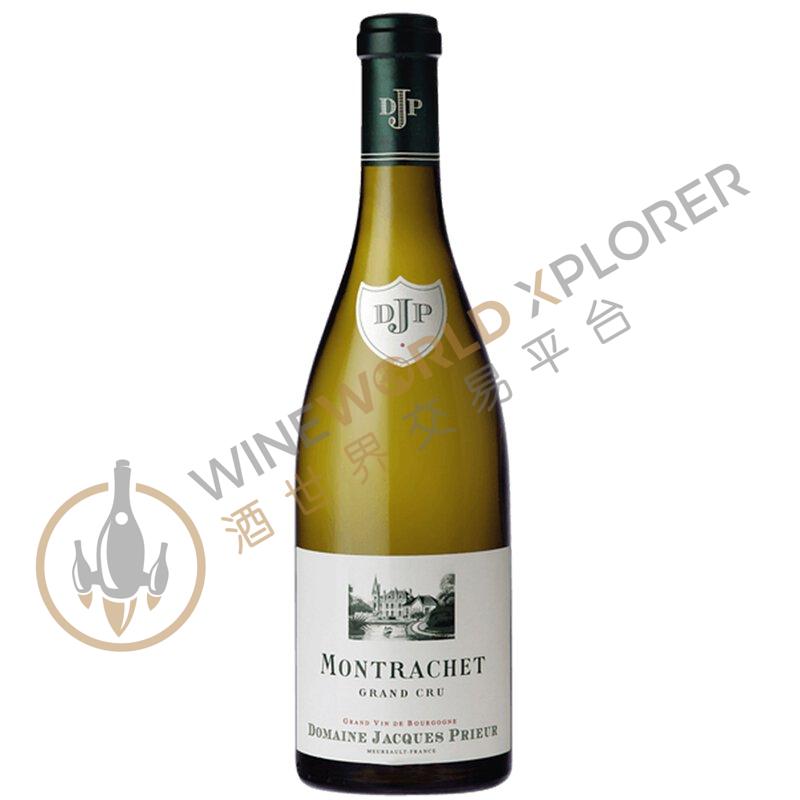
Jacques Prieur, Montrachet Grand Cru 2012
 View analysis


Description
Tasting notes

Reviewed by: Neal Martin
The 2012 Montrachet Grand Cru comes from their 0.5863-hectares (to be exact) of vine, one plot located in the middle of the vineyard and one above located on the terrace. The bouquet takes a little while to start motoring, eventually unfolding to reveal scents of fresh lime, green apple, wet limestone and sea spray. The palate is well balanced with a slight viscous texture on the spicy, rich opening. There is plenty of depth here, with lightly honeyed fruit and that spicy leitmotif becoming more pronounced towards the finish. I can appreciate the persistency and a long saline aftertaste – superb. Several years ago, mere weeks after it was announced that I would be working for this very publication, I visited Domaine Jacques Prieur to taste their 2005s unaware that the authorities had erroneously issued a letter declaring that I was the official reviewer rather than Mr. Schildknecht. I guess they were just six years premature. Nevertheless, I have tracked the progress of this domaine owned by the Labruyere family, who also preside over Chateau Rouget in Pomerol and their original estate in Moulin-a-Vent. Edouard Labruyere was out in Asia when I visited on a cold Sunday morning, so it was oenologist Nadine Gublot who guided me through their portfolio that had been curtailed by the inclement weather. “It was not an easy growing season,” Nadine explained in her lovely thick German accent. “The weather was like 2013, not very bad, not very fine, sunny and rainy with a constant pressure of mildew at the beginning of the season and oidium towards the end. We had to work very hard in the vineyard to preserve the healthy conditions. It is a low yielding vintage because June was fresh and overcast so the flowering was very bad for both Pinot Noir and Chardonnay. On the positive side, as the weather was ‘comme ci comme ca’ the quantity of berries was small and the berries were spaced out, so it was like Mother Nature equaling everything out. Average yields came in at around 20 hectoliters per hectare; Volnay particularly affected by the bad flowering and hail at the end of June, so they produced only around 10 hectoliters per hectare. All the wines are still in barrels on the lees and not racked. Malo-lactic was very late, some just finishing one month ago (October) for the whites due to the cold weather and also because of cold natural temperatures in the cellar as I never warm it. (Consequently some of the whites are missing from this report.) There was no batonnage, which I stopped in 2008 because the grapes are naturally rich. The wines are a big surprise. At the beginning of the harvest, I never thought we would produce so bright wines, especially for the reds. We did not need any chaptalization. I am surprised by the fruit, texture, balance and freshness. I could never imagine during that summer that we would have produced such beautiful wines.” Reader will be aware that some of the usual cuvees are missing this year. Nadine had to make the difficult decision of blending severely affected vineyards together, especially in Volnay and Chambertin. “As the yield and crop were very low, we have a very small quantity in Champans and Clos des Santenots. Usually we have three premier crus. Volnay Santenots comes from the young vines of Clos des Santenots around 17 years old. We decided to make two Volnays in 2012 after vinifying and maturing them separately: Volnay 1er Cru that will be a blend of Champans and the young vines of Santenots and the Volnay 1er Santenots from Clos des Santenots plus a small part of the old vines in Santenots. In Chambertin we have four different parcels: two parcels of young vines of 17 years old and two parcels that are 50-years old that are vinified, matured and bottled separately. They form the Gevrey-Chambertin Premier Cru and Chambertin Grand Cru respectively. At the moment, I don’t know whether we will bottle a Chambertin Grand Cru.” Importer: Frederick Wildman & Sons, New York, NY; tel. (212) 355-0700 and through Berry Brothers & Rudd (UK)
About the Producer
HISTORY Domaine Jacques Prieur's mythical story started on February 24th, 1868, with the wedding, in Bligny-les-Beaune, of Claude Duvergey (22 years old) and Marie Taboureau (19 years old). Marie was born in Bligny in 1848 and Claude in Meursault in 1845. Their parents were winegrowers. Claude founded the Duvergey-Taboureau House and thrived in the wine and spirit trade, without investing directly, at first, in viticulture. In 1879, he acquired the property of "Les Herbeux" in Meursault, current heart of Domaine Jacques Prieur... and started buying vineyards. He then made a risky bet with the arrival of the terrible phylloxera in Côte d'Or. However, his choices would finally make him a visionary thanks to the use of American plants as cure. In 1889 he acquired the famous Clos de Mazeray Monopole (Meursault), a parcel of Volnay Santenots, 4.5 ha (11 ac) of Clos Vougeot and 2 lots in Chambolle-Musigny. In 1890 he became the sole owner of the prestigious Clos des Santenots in Volnay, 1.5 ha (3.7 ac) of Puligny-Montrachet Les Combettes and 0.45 ha (1.1 ac) of the mythical Montrachet (notably supplemented by the "Dent de Chien" parcels in 1891 and 1892). He then ran his trade business in the Château de Bligny bought in 1890 for his wife. Without any direct heir, both spouses would turn to the Taboureau family side. Thus they married in 1891 Hélène Taboureau (Marie's niece) and a well-born young man from Beaune, Henri Prieur (itinerant salesman). They benefited from a very advantageous marriage contract including some goods but especially the promise of a profit-sharing in the Duvergey-Taboureau's trade. Jacques Prieur was born on January 31st, 1893, from the union of Hélène and Henri. The estate kept growing in 1895 with a new acquisition in Musigny and a swap between a plot of Clos Vougeot and parcels of Chambertin and Chambertin Clos-de-Bèze. In 1899, Claude Duvergey added Volnay Champans to its collection and in 1907, Chevalier-Montrachet. He died on March 9th, 1920, and bequeathed all of his property to Jacques Prieur (his wife remaining stakeholder). Soon after, the latter married Madeleine Darnat, daughter of sheets merchants from Lyon. In 1924, Jacques Prieur and comte Jules Lafon instituted the famous "Paulée de Meursault" in order to celebrate the end of harvests with all winegrowers from the village. Marie Duvergey-Taboureau died in 1935 and definitely left the estate to Jacques Prieur. Co-founder of the legendary Chevaliers du Tastevin, he gave his name to the estate in 1956. He died in 1965 and his wife in 1974, leaving the winery to their 6 children. In 1988, in order to avoid selling the winery to foreign shareholders, 5 important French families united, among them Labruyère Family, winegrowers and entrepreneurs from South Burgundy. In the 1990s the Grands Crus of Corton-Bressandes and Corton-Charlemagne would enrich the mosaic of terroirs of the estate. Today leading this jewel of Burgundy, Labruyère Family, supported by Prieur Family's heirs, promotes and defends, every single day, the great terroirs of Burgundy, worldwide
